
Short Courses and Workshops
The following short courses on topics of current interests will be offered as a part of the Conference:
-
Short Course 1 :-
Modern Statistical Computing and Data Analysis with R
Dr. Arnab Hazra, IIT-Kanpur (Half-day. (Tentative time: December 26, 2026 Morning. Subject to change.))

-
Short Course 2 :-
Introduction to Python for Data Science, Machine/Deep Learning
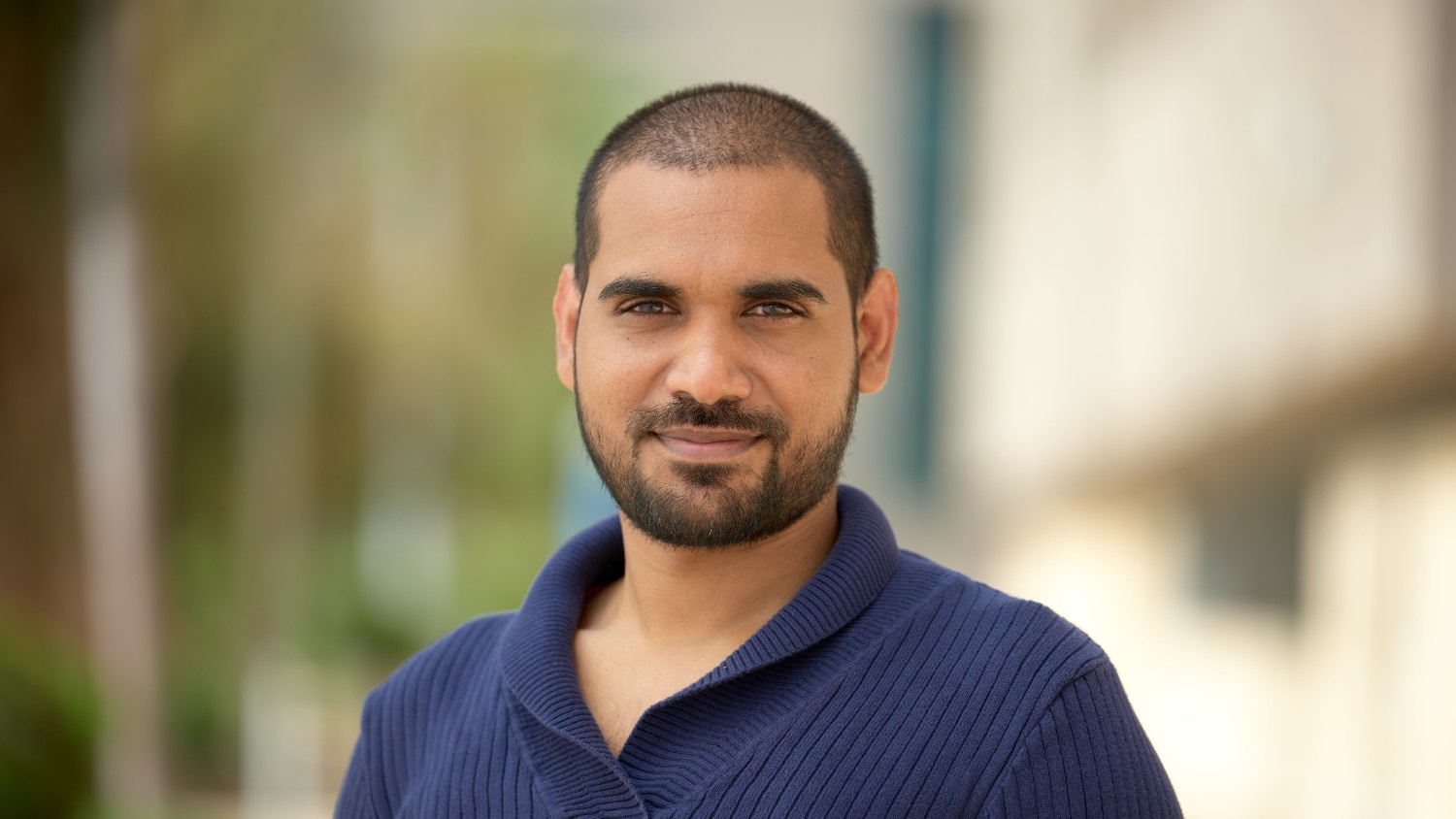
Dr. Rishikesh Yadav, IIT-Mandi (Half-day short course. (Tentative time: December 26, 2026 Afternoon. Subject to change.))
Teaching Assistant: Vedant Vibhor (PhD Student, School of Mathematical and Statistical Sciences (SMSS), IIT Mandi)
-
Short Course 3 :-
Bayesian Neural Networks and Probabilistic Deep Learning
Dr. Rishikesh Yadav, IIT-Mandi (Half-day short course. (Tentative time: December 27, 2026 Afternoon. Subject to change.))
Teaching Assistant: Vedant Vibhor (PhD Student, School of Mathematical and Statistical Sciences (SMSS), IIT Mandi)
-
Short Course 4 :-
Capture Recapture Experiments
Dr. Diganta Mukherjee, ISI-Kolkata (Half-day short course. (Tentative time: December 28, 2026 Afternoon. Subject to change.))

-
Short Course 5 :-
Singular Spectrum Analysis and Time Series Analysis Across Domains
Dr. Syamala Krishnannair, University of Zululand, South Africa (Half-day short course. (Tentative time: December 29, 2026 Morning. Subject to change.)))

Short Courses
Modern Statistical Computing and Data Analysis with R
Introduction to Python for Data Science, Machine/Deep Learning
Bayesian Neural Networks and Probabilistic Deep Learning
Capture Recapture Experiments
Singular Spectrum Analysis and Time Series Analysis Across Domains
|
Short Courses |
Primary affiliation |
|
|---|---|---|
|
India |
Outside India |
|
|
Short Course/Workshop registration |
USD 10.00 < INR 1000 |
USD 50.00 |
Modern Statistical Computing and Data Analysis with R
Date: Half-day. (Tentative time: December 26, 2026 Morning. Subject to change.)
Title: Modern Statistical Computing and Data Analysis with R
Instructor: Dr. Arnab Hazra, IIT-Kanpur
Description:
Background and Rationale:
Statistical computing has become an essential component of modern data science, quantitative research, and applied analytics across disciplines including statistics, economics, environmental science, health sciences, social sciences, and artificial intelligence. R has emerged as one of the most widely used open-source environments for statistical computing, visualization, reproducible research, and modern data analysis. Beyond classical statistical methods, contemporary R workflows now support interactive visualization, machine learning, Bayesian modelling, spatial analysis, and reproducible scientific reporting. This short course provides an accessible and practice-oriented introduction to modern statistical computing with R, emphasizing reproducible workflows, data visualization, exploratory analysis, and contemporary statistical methods. The course combines foundational programming skills with practical applications using real-world datasets.
Aim:
To equip participants with practical skills in modern statistical computing and reproducible data analysis using R for research and applied analytics.
Learning Outcomes:
- Understand the fundamentals of the R programming environment
- Import, clean, transform, and visualize data using modern R workflows
- Perform exploratory and statistical data analysis
- Create reproducible analytical reports and visualizations
- Apply basic machine learning and statistical modelling techniques in R
- Use modern R ecosystems for research and data science applications
Foundations of R
- R environment and RStudio interface
- Data structures and programming basics
- Working with scripts and projects
- Data import and preprocessing
- Tidy data principles
- Data transformation using dplyr and tidyr
- Grammar of graphics
- Visualization using ggplot2
- Interactive and publication-quality graphics
- Descriptive and inferential statistics
- Linear and generalized linear models
- Introduction to resampling and simulation
- R Markdown and Quarto
- Dynamic reports and presentations
- Workflow organization and version control concepts
- Introduction to machine learning workflows
- Basic Bayesian analysis in R
- Spatial and time series data examples
- AI-assisted coding tools and modern analytical workflows
- Public health and epidemiology
- Environmental and climate data
- Financial and economic analytics
- Social science and survey data
Postgraduate students, researchers, statisticians, data analysts, and faculty members interested in modern statistical computing and data analysis.
Teaching Approach:
Lectures, live coding sessions, hands-on exercises, real-world datasets, and software demonstrations.
Requirements:
Basic familiarity with statistics is recommended. Prior programming experience is helpful but not mandatory.
Expected Impact:
The course will strengthen participants’ ability to conduct reproducible statistical analyses, develop modern data analysis workflows, create effective visualizations, and apply computational tools in interdisciplinary research settings. Participants will gain practical exposure to contemporary statistical computing practices widely used in academia, industry, and data science applications.
Introduction to Python for Data Science, Machine/Deep Learning
Date: Half-day short course. (Tentative time: December 26, 2026 Afternoon. Subject to change.)
Title: Introduction to Python for Data Science, Machine/Deep Learning
Instructor: Dr. Rishikesh Yadav, IIT-Mandi
Teaching Assistant: Vedant Vibhor, (PhD Student, School of Mathematical and Statistical Sciences (SMSS), IIT Mandi)
Description:
Background and Rationale:
Python has become one of the most widely used programming languages in data science, statistics, machine learning, deep learning, and scientific computing due to its simplicity and rich ecosystem of libraries. Modern analytical and AI-driven research increasingly depend on Python-based computational workflows for data processing, visualization, modeling, and machine learning applications. This short course provides a concise and hands-on introduction to Python for data science and analytics, with emphasis on practical workflows using Jupyter Notebook and Google Colab. The course is designed to establish a strong computational foundation for students and researchers intending to work in statistical analytics, machine learning, and deep learning using Python.
Aim:
To introduce participants to practical Python programming and modern computational workflows for data science, analytics, and machine/deep learning applications.
Learning Outcomes:
- Understand basic Python programming concepts
- Work with Jupyter Notebook and Google Colab
- Import, manipulate, and visualize datasets
- Use core Python libraries for data science workflows
- Understand basic machine learning workflows in Python
- Develop foundational skills required for deep learning and advanced AI applications
- Basic familiarity with any programming language is desirable
- An elementary understanding of data handling in any programming language will be beneficial
- No prior experience in Python is required, though basic knowledge would be highly beneficial
- Introduction to Python ecosystem for data science and machine learning
- Python environments and workflows
- Jupyter Notebook
- Google Colab
- Miniconda and package management
- Fundamentals of Python programming
- Variables and data types
- Lists, dictionaries, loops, and functions
- Numerical and data analysis libraries
- NumPy
- Pandas
- Data visualization
- Matplotlib
- Seaborn
- Introduction to machine learning workflows
- Data preprocessing
- Training and testing datasets
- Introduction to Scikit-learn
- Brief overview of deep learning ecosystems
- TensorFlow
- PyTorch
- TensorFlow Probability
- Hands-on demonstrations and coding exercises
The course will include short lectures, live coding demonstrations, and guided hands-on exercises using real computational workflows in Python.
Expected Outcome:
Participants will develop a practical foundation in Python programming and computational workflows for data science and analytics, and will be prepared to begin working with data science, statistical analysis, machine learning, and deep learning frameworks in Python.
Bayesian Neural Networks and Probabilistic Deep Learning
Date: Half-day short course. (Tentative time: December 27, 2026 Afternoon. Subject to change.)
Title: Bayesian Neural Networks and Probabilistic Deep Learning
Instructor: Dr. Rishikesh Yadav, IIT-Mandi
Teaching Assistant: Vedant Vibhor, (PhD Student, School of Mathematical and Statistical Sciences (SMSS), IIT Mandi)
Description:
Background and Rationale:
Modern machine learning and deep learning methods have achieved remarkable success across multiple scientific and industrial domains. However, standard deep neural networks often lack proper uncertainty quantification, limiting their reliability in high-stakes decision-making problems. Bayesian Neural Networks (BNNs) combine Bayesian statistics with deep learning by treating model parameters probabilistically, thereby enabling principled uncertainty quantification, improved generalization, and robust predictive inference. This short course introduces participants to Bayesian Neural Networks and modern probabilistic deep learning methods, with emphasis on both conceptual understanding and practical implementation using Python-based computational workflows. The course will provide participants with a comprehensive introduction to Bayesian deep learning and modern probabilistic AI tools using TensorFlow, TensorFlow Probability, and related ecosystems.
Aim:
To introduce participants to Bayesian Neural Networks, uncertainty quantification, and modern probabilistic deep learning workflows using Python.
Learning Outcomes:
- Understand the foundations and link between Bayesian statistics and neural networks
- Explain uncertainty quantification in deep learning models
- Understand probabilistic formulations of neural networks
- Gain familiarity with Bayesian inference methods for deep learning
- Implement introductory Bayesian Neural Networks using Python
- Understand modern probabilistic deep learning ecosystems and workflows
- Basic familiarity with statistics, probability, and machine learning concepts is desirable
- Knowledge of basic neural networks and Bayesian statistics is highly beneficial though not mandatory
- Introductory programming experience in Python will be beneficial
- Participants without prior Python programming experience are highly recommended to attend the short course: “Introduction to Python for Data Science and Machine/Deep Learning” before attending this course
- A brief introduction to machine learning and deep learning workflows
- Basics of Bayesian statistics
- Bayes theorem
- Prior, likelihood, and posterior distributions
- Bayesian inference concepts
- Basics of Neural Networks
- Introduction to components of neural networks
- Simple architectures such as Multi Layer Perceptron (MLP)
- General training strategies for neural networks
- Introduction to Bayesian Neural Networks
- Motivation for Bayesian deep learning
- Probabilistic neural networks
- Prior distributions on network weights
- Posterior inference in BNNs
- Uncertainty quantification in deep learning
- Aleatoric and epistemic uncertainty
- Predictive uncertainty
- Model calibration
- Inference methods for Bayesian deep learning
- Markov Chain Monte Carlo (MCMC)
- Variational Inference (VI)
- Approximate Bayesian inference
- Modern probabilistic deep learning ecosystems; applications and case studies
- TensorFlow Probability
- Bayesian deep learning workflows in Python
- Applications in environmental, climate, and financial data
The course will include short lectures, computational demonstrations, guided coding sessions, and practical hands-on examples using modern probabilistic deep learning workflows in Python.
Expected Outcome:
Participants will develop foundational understanding of Bayesian Neural Networks and probabilistic deep learning methods, and will gain practical exposure to modern uncertainty-aware AI workflows using Python.
Capture Recapture Experiments
Date: Half-day short course. (Tentative time: December 28, 2026 Afternoon. Subject to change.)
Title: Capture Recapture Experiments
Instructor: Dr. Diganta Mukherjee, ISI-Kolkata
Description:
Background and Rationale:
The capture–recapture methods refer to studies in which a sample of individuals is marked and then some, but usually not all, of them are recovered on one or more subsequent occasions. Goals of capture–recapture studies include estimating population size, survival, and studying associations between these and other variables such as how survival rates vary with age or across years. Although the methods were originally used primarily to estimate population size and survival rates, contemporary methods provide a rigorous approach for studying a wide variety of issues in behaviour, ecology, and evolution. The methods, however, are complex and continually evolving, with new refinements emerging regularly. This course provides an introductory primer on these methods.
The basic rationale in capture–recapture methods is to estimate what fraction of the individuals marked and present in the study area is counted during each sampling period. This fraction is then used to estimate quantities of interest. Two general approaches are commonly used: assuming a closed population and assuming homogeneity of recapture probabilities. These approaches, along with possible deviations and extensions, will be discussed.
Aim:
To equip participants with theoretical understanding and practical skills in capture–recapture experiments, with applications across different real-world domains.
Learning Outcomes:
- Understand the fundamental concepts of enumeration
- Gain clarity on dual-system and multiple counting system data
- Apply estimation methodologies, both classical and modern
- Apply capture–recapture methodology in real-life situations across domains
- Concepts, illustrations, and relevance
- Methods: classical and modern approaches
- Case studies across application domains
Postgraduate students, researchers, statisticians, and data analysts.
Teaching Approach:
Lectures and case studies.
Requirements:
Participants should have basic knowledge of statistics and probability.
Expected Impact:
Improved ability to design complete enumeration exercises and analyze resulting data, with applications across social and biological science domains. The course will enhance participants’ ability to:
- Apply modern, flexible enumeration methods
- Analyze complex real-world datasets
- Extend methods to interdisciplinary research problems
- Bridge the gap between theory and applied statistics
Singular Spectrum Analysis and Time Series Analysis Across Domains
Date: Half-day short course. (Tentative time: December 29, 2026 Morning. Subject to change.)
Title: Singular Spectrum Analysis and Time Series Analysis Across Domains
Instructor: Dr. Syamala Krishnannair, University of Zululand, South Africa
Description:
Background and Rationale:
Time series data arise in many scientific and applied fields including economics, environmental science, engineering, health sciences, and social systems. Traditional statistical methods often assume linearity and stationarity, which may not hold in real-world datasets.
Singular Spectrum Analysis (SSA) is a powerful, non-parametric, and data-driven technique for time series decomposition, smoothing, trend extraction, and forecasting. Its flexibility makes it highly suitable for analysing complex and noisy time series across multiple domains.
This short course introduces participants to Singular Spectrum Analysis (SSA) and modern time series methods, with a strong emphasis on practical applications across diverse fields. It provides an accessible and practice-oriented introduction to SSA and contemporary time series techniques, equipping participants with valuable tools for research and applied data analysis in multiple domains.
Aim:
To equip participants with theoretical understanding and practical skills in Singular Spectrum Analysis and time series modelling, with applications across different real-world domains.
Learning Outcomes:
- Understand the fundamental concepts of time series analysis
- Apply Singular Spectrum Analysis for decomposition and forecasting
- Compare SSA with classical time series methods (ARIMA, exponential smoothing)
- Analyse time series data from multiple application domains
- Implement SSA using statistical software such as R or Python
- Introduction to time series data and key concepts
- Classical time series models (brief overview)
- Theory of Singular Spectrum Analysis
- Embedding, decomposition, and reconstruction in SSA
- Trend, seasonality, and noise extraction
- Forecasting using SSA
- Multivariate and advanced SSA extensions
- Case studies across domains:
- Economics and finance
- Environmental and climate data
- Health and epidemiology
- Engineering systems
Postgraduate students, researchers, statisticians, and data analysts.
Teaching Approach:
Lectures, hands-on sessions, software demonstrations, and case studies.
Requirements:
Participants should have basic knowledge of statistics. Familiarity with introductory time series concepts is recommended.
Expected Impact:
Improved ability to analyse complex time series data and apply modern methods across domains. The course will enhance participants’ ability to:
- Apply modern, flexible time series methods
- Analyse complex real-world datasets
- Extend methods to interdisciplinary research problems
- Bridge the gap between theory and applied statistics
Note:
- 1.Short Course/Workshop registration: USD 10 < INR 1000 each for Indian participants and USD 50 for others.
- 2.In order to register for the short courses and the conference, please follow this link: https://www.intindstat.org/conference2026/regemailValidation